
The idea of running your own online radio station used to sound complicated and expensive. In 2026, it’s much more accessible. Independent DJs, podcasters, music curators, local communities, and even small businesses are launching internet radio stations from home studios, spare bedrooms, and laptops.
If you want to start internet radio station broadcasting today, you no longer need a traditional FM tower or a massive budget. What you do need is a reliable internet connection, the right streaming setup, clear licensing knowledge, and realistic expectations about audio quality and listener growth.
🎵 Similar Stations
A lot of new broadcasters make the mistake of focusing only on music playlists or branding. In reality, internet radio success depends just as much on stream stability, audio consistency, automation tools, and listener experience.
This guide walks through the real-world process of starting an internet radio station in 2026, including equipment, software, hosting, licensing, streaming technology, and common mistakes beginners often run into.
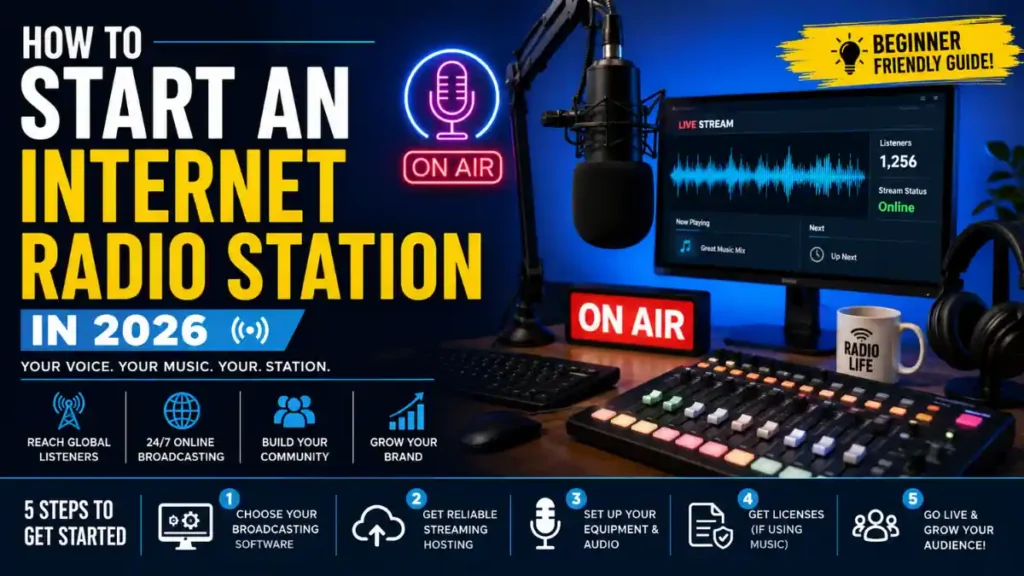
What Is an Internet Radio Station?
An internet radio station streams audio online instead of broadcasting over traditional AM or FM frequencies.
Listeners tune in using:
- Mobile apps
- Web players
- Smart speakers
- Streaming directories
- Car infotainment systems
- Podcast-style radio apps
Unlike FM broadcasting, internet radio has fewer hardware barriers. You don’t need a transmission tower or FCC broadcast frequency license just to stream online audio.
Modern internet radio stations can include:
- Live DJ shows
- Automated music rotation
- Talk radio
- Sports commentary
- News programming
- AI-assisted voice segments
- Podcast replays
- Genre-based music channels
Some stations operate 24/7 with automation software, while others only stream during scheduled live shows.
Why Internet Radio Is Still Growing in 2026
Despite podcasts and on-demand audio platforms becoming more popular, internet radio continues to grow for a simple reason: people still enjoy live, curated audio experiences.
Listeners often prefer radio-style streaming for:
- Discovering new music
- Background listening at work
- Live commentary
- Community-focused content
- Human-hosted programming
- Real-time interaction
Internet radio also works well for niche audiences.
Examples include:
- Local indie music scenes
- Regional language stations
- Underground electronic music
- Sports fan communities
- Faith-based broadcasting
- 24-hour chill or lo-fi channels
The barrier to entry is lower than traditional broadcasting, but competition is higher. That means audio quality and reliability matter more than ever.
What You Need to Start an Internet Radio Station
A Reliable Internet Connection
Your upload speed matters more than download speed.
For stable broadcasting:
| Stream Quality | Recommended Upload Speed |
|---|---|
| 64 kbps AAC | 2 Mbps minimum |
| 128 kbps MP3 | 5 Mbps minimum |
| 320 kbps HQ Audio | 10 Mbps or higher |
Wired Ethernet connections are strongly recommended over Wi-Fi for live broadcasting.
A lot of beginner stream interruptions happen because someone else in the house starts gaming, uploading files, or streaming 4K video during a live show.
Broadcasting Software
Broadcasting software sends your audio stream to the streaming server.
Popular options in 2026 include:
- OBS Studio
- Mixxx
- RadioBOSS
- SAM Broadcaster
- BUTT (Broadcast Using This Tool)
- VirtualDJ
- AzuraCast
- Rivendell
Common Real-World Setup
A beginner station might use:
- USB microphone
- OBS Studio
- AutoDJ playlist rotation
- Cloud streaming host
- Basic web player
A more advanced station could include:
- Audio mixers
- Multiple microphones
- VoIP call-ins
- Sound processing
- AI voice automation
- Redundant backup streams
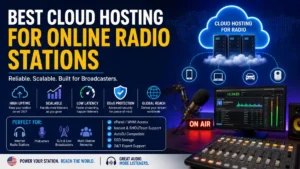
Streaming Hosting Provider
Your stream usually needs a hosting server.
This server distributes audio to listeners so your home internet doesn’t get overloaded.
Most internet radio stations use:
- SHOUTcast hosting
- Icecast hosting
- Cloud radio streaming services
Good hosting providers typically include:
- AutoDJ
- Listener analytics
- Stream relay backups
- Mobile player support
- SSL stream security
- Streaming dashboards
Free hosting may sound tempting, but reliability problems become obvious once listener numbers grow.
Choosing the Right Audio Format
Audio compression matters more than many beginners realize.
MP3 vs AAC+
| Format | Pros | Cons |
|---|---|---|
| MP3 | Universal compatibility | Larger file sizes |
| AAC+ | Better quality at lower bitrate | Slight compatibility limitations |
In 2026, AAC+ is widely used because mobile listeners often stream over cellular data connections.
Lower bandwidth usage helps prevent buffering.
Equipment You Actually Need
Many people overspend early.
You do not need a professional FM studio on day one.
Basic Beginner Setup
- USB microphone
- Closed-back headphones
- Laptop or desktop PC
- Audio software
- Streaming host account
Mid-Level Setup
- XLR microphone
- Audio interface
- Mixer
- Sound processor
- Backup internet connection
Audio Quality Matters
Listeners tolerate simple setups.
They usually won’t tolerate:
- Distorted microphones
- Constant clipping
- Loud background noise
- Uneven audio levels
- Sudden stream drops
A clean, stable stream is more important than expensive gear.
Internet Radio Licensing in the USA
This is one area beginners often misunderstand.
Even online-only radio stations may need music licensing if they stream copyrighted songs.
In the United States, internet radio royalties often involve organizations like:
- SoundExchange
- ASCAP
- BMI
- SESAC
Licensing requirements depend on:
- Commercial vs non-commercial status
- Listener count
- Revenue
- Music usage
- On-demand features
Important Reality Check
You cannot legally stream copyrighted commercial music simply because your station is “small” or “nonprofit.”
Many new broadcasters ignore licensing until they receive takedown notices or payment demands.
Talk radio and original programming generally have fewer licensing complications.
Live Broadcasting vs Automated Radio
Live Radio
Best for:
- DJ interaction
- Interviews
- Sports
- Live requests
- Community stations
Challenges:
- Scheduling
- Technical failures
- Host reliability
- Internet stability
Automated Stations
Best for:
- 24/7 music channels
- Low-maintenance broadcasting
- Background radio formats
Automation tools can schedule:
- Music rotations
- Sweepers
- Station IDs
- Advertisements
- AI voice announcements
Many successful stations combine live shows with automated overnight programming.
AI Audio Tools in Internet Radio
AI audio tools are becoming common in radio workflows, especially for smaller stations with limited staff.
Popular uses include:
- Voice tracking
- Automated weather updates
- AI-generated station liners
- Audio cleanup
- Noise reduction
- Podcast transcription
- Content repurposing
But there’s a practical limit.
Listeners still notice when stations sound overly robotic or repetitive. Human personality remains important for listener loyalty.
Stations that rely entirely on synthetic voices often struggle to build strong communities.
How VPNs Affect Internet Radio Streaming
VPN usage has increased among radio listeners, especially for accessing geo-restricted stations.
Why Some Stations Restrict Access
Streaming restrictions can happen because of:
- Music licensing agreements
- Regional advertising rights
- Sports broadcasting contracts
- International royalty limitations
For example:
A station may legally stream sports commentary only within the United States.
Listeners outside approved regions may see blocked streams.
VPN Limitations
A VPN may help users access restricted streams, but it can also create problems:
- Increased buffering
- Added latency
- Lower audio quality
- Stream authentication failures
Some radio apps actively block known VPN servers.
Mobile Apps and Smart Speaker Support
Modern listeners expect easy access.
Many stations now support:
- iPhone apps
- Android apps
- Alexa skills
- Google Assistant
- Apple CarPlay
- Android Auto
If your stream only works on a desktop browser, listener growth becomes much harder.
Podcasting and Internet Radio Are Blending Together
A growing number of broadcasters now combine:
- Live radio
- Recorded podcasts
- On-demand replays
- Social media clips
This hybrid model helps stations reach audiences who don’t listen live.
Example:
A weekly live interview show can later become:
- Podcast episodes
- YouTube clips
- TikTok snippets
- Replay archives
This approach improves discoverability without requiring constant live programming.
Common Mistakes New Internet Radio Owners Make
Ignoring Audio Levels
Uneven loudness frustrates listeners quickly.
Music, microphones, and commercials should sound balanced.
Using Unstable Home Internet
Wi-Fi dropouts can ruin live shows.
A wired connection is usually worth it.
Choosing Extremely High Bitrates
Many beginners assume higher bitrate always means better radio.
In reality:
- High bitrates increase bandwidth costs
- Mobile listeners may buffer constantly
- Weak internet users may disconnect
128 kbps AAC often works well for general streaming.
No Backup Plan
Professional stations prepare for:
- Internet outages
- PC crashes
- Power failures
- Dead microphones
Even small stations benefit from backup playlists or cloud automation.
Playing Copyrighted Music Without Licensing
This remains one of the biggest legal mistakes in internet broadcasting.
Practical Tips for Building a Better Internet Radio Station
Start Small
Don’t launch with a 24/7 schedule immediately.
Many successful stations started with:
- Weekend shows
- Evening programming
- Genre-specific broadcasts
Focus on Consistency
Listeners return when they know what to expect.
Consistent audio style matters more than constant experimentation.
Monitor Your Stream Regularly
Always test your stream from:
- Mobile devices
- Cellular data
- Smart speakers
- Different browsers
Sometimes broadcasters think their station works perfectly while listeners experience buffering or silence.
Use Audio Processing Carefully
Over-processing creates listener fatigue.
Heavy compression can make streams sound harsh and exhausting over long listening sessions.
Archive Important Shows
Recording live broadcasts helps with:
- Podcast creation
- Replay scheduling
- Content backups
- Social clips
Important Technical Requirements for 2026
Recommended Minimum Specs
| Component | Recommendation |
|---|---|
| CPU | Modern quad-core processor |
| RAM | 8 GB minimum |
| Internet Upload | 5–10 Mbps |
| Storage | SSD preferred |
| Backup Power | UPS battery backup |
Streaming Protocols Still Common in 2026
- Icecast
- SHOUTcast
- HLS streaming
- HTTPS secure streams
Secure HTTPS streams are becoming increasingly important because some browsers now warn users about unsecured audio streams.
Audio Processing Recommendations
Good processing should improve:
- Loudness consistency
- Clarity
- Speech intelligibility
Bad processing causes:
- Distortion
- Listener fatigue
- Pumping artifacts
- Clipped audio
FAQ
Do I need an FCC license for internet radio?
Usually no, if you’re only streaming online and not using over-the-air FM frequencies. However, music licensing and royalty requirements may still apply.
How much does it cost to start an internet radio station?
A simple setup can start under a few hundred dollars. Larger stations with professional equipment, licensing, apps, and dedicated hosting can cost significantly more.
Can I run an internet radio station from home?
Yes. Many small stations operate from home studios. Reliable internet and proper audio setup matter more than physical studio size.
What bitrate should I use for internet radio?
For general listeners, 128 kbps AAC is often a practical balance between sound quality and bandwidth usage.
Is podcasting replacing internet radio?
Not entirely. Many broadcasters now combine live radio with podcast distribution instead of choosing one or the other.
Can I use AI voices on my station?
Yes, many stations use AI-assisted tools for automation and production. But stations usually perform better when real human personalities remain part of the experience.
Final Thoughts
Starting an internet radio station in 2026 is more realistic than ever, but successful broadcasting still requires planning, technical stability, and consistency.
The biggest difference between stations that grow and stations that disappear usually comes down to reliability. Listeners stay loyal when streams work properly, audio sounds clean, and programming feels intentional.
You don’t need expensive hardware or a huge audience to begin. A simple, stable setup with clear goals often performs better than an overcomplicated station full of technical problems.
Whether you want to stream music, host talk shows, build a local community station, or launch a niche online channel, internet radio still offers something unique that automated playlists and algorithms often cannot: a real human listening experience.
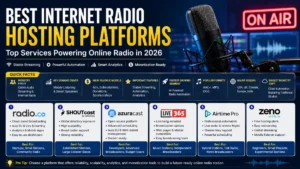
Also Read: Best Internet Radio Hosting Platforms
Note: We do not host any streaming content on our servers. All radio streams are links provided by official broadcasters for public use.