
Best Internet Radio Hosting Platforms: The long-running debate inside the digital broadcasting industry appears to be settling as internet radio stations, independent creators, and media companies increasingly move toward cloud-based radio hosting ecosystems. What once required expensive transmitters and complex studio infrastructure can now be operated from a laptop, smartphone, or browser dashboard.
Best Internet Radio Hosting Platforms in 2026: Which Services Are Powering the Future of Online Broadcasting?
The growth of internet radio has accelerated after podcasting, smart speakers, connected cars, and AI-driven recommendation systems reshaped audio consumption globally. From independent DJs to large media brands, the race is no longer about simply “being online.” The real competition is centered around stream quality, monetization, reliability, analytics, and listener retention.
🎵 Similar Stations


As thousands of online radio stations launch every year, choosing the right hosting platform has become one of the most important business decisions for broadcasters.
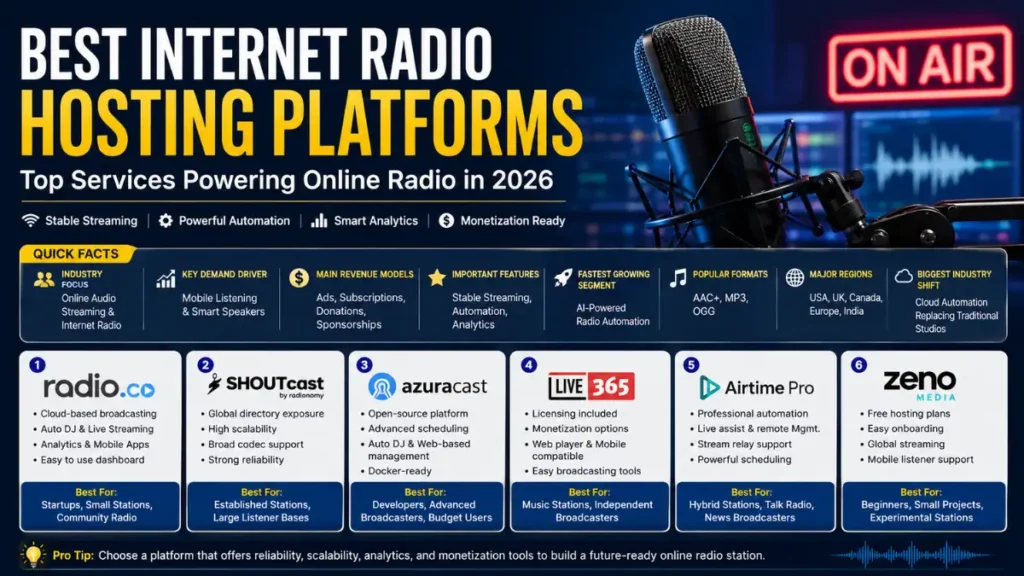
Quick Facts: Best Internet Radio Hosting Platforms 2026
| Category | Details |
|---|---|
| Industry Focus | Online Audio Streaming & Internet Radio |
| Key Demand Driver | Mobile listening and smart speakers |
| Main Revenue Models | Ads, subscriptions, donations, sponsorships |
| Most Important Features | Stable streaming, automation, analytics |
| Fastest Growing Segment | AI-powered radio automation |
| Popular Audio Formats | AAC+, MP3, OGG |
| Major Listener Regions | USA, UK, Canada, Europe, India |
| Biggest Industry Shift | Cloud automation replacing traditional studios |
Why Internet Radio Hosting Matters More Than Ever
The internet radio industry has entered a new phase. Earlier, many stations focused only on broadcasting music online. Today, stations are expected to deliver:
- Mobile-friendly streams
- Smart speaker compatibility
- Real-time metadata
- Listener analytics
- Multi-device streaming
- Automated scheduling
- Monetization tools
- 24/7 uptime reliability
A poor hosting provider can damage audience growth within weeks. Buffering issues, server crashes, delayed streams, or audio compression problems often push listeners toward competitors instantly.
Industry analysts believe audio consumption behavior has changed permanently after the rise of connected ecosystems such as:
- Apple CarPlay
- Android Auto
- Alexa-enabled devices
- Smart TVs
- Wearable audio devices
This shift has increased pressure on broadcasters to invest in professional-grade hosting infrastructure.
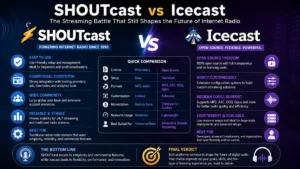
Also Read: SHOUTcast vs Icecast Comparison
Top Internet Radio Hosting Platforms in 2026
1. Radio.co
Radio.co remains one of the most recognized internet radio hosting platforms globally. The platform is widely used by independent stations, educational broadcasters, and commercial internet radio operators.
Key Features
- Cloud-based broadcasting
- Auto DJ system
- Live streaming support
- Mobile broadcasting
- Analytics dashboard
- Multi-user access
- Website player integration
Why It Stands Out
Its simplicity continues to attract beginners, while advanced automation tools appeal to professional broadcasters. The platform significantly reduces technical barriers.
Best For
- Startups
- Small radio brands
- Online music stations
- Community broadcasters
2. Shoutcast
Shoutcast remains one of the oldest and most influential names in internet radio streaming.
Key Features
- Global directory exposure
- Broad codec support
- High scalability
- Third-party integrations
- Large listener handling capacity
Industry Impact
Many radio hosting companies still rely on Shoutcast infrastructure behind the scenes. Its long-standing reputation gives it strong credibility among broadcasters.
Best For
- Established radio stations
- Large listener bases
- Custom radio projects
3. AzuraCast
AzuraCast has emerged as a major force in the self-hosted radio automation segment.
Key Features
- Open-source architecture
- Advanced playlist scheduling
- Auto DJ support
- Web-based management
- Docker deployment
- Analytics and reporting
Why Broadcasters Prefer It
Cost-sensitive broadcasters increasingly prefer self-hosted solutions to avoid monthly subscription fees. AzuraCast provides strong flexibility and customization.
Best For
- Technical users
- Developers
- Advanced broadcasters
- Budget-focused radio operators
4. Live365
Live365 regained strong momentum after rebuilding its business structure and licensing support system.
Key Features
- Music licensing included
- Easy broadcasting tools
- Monetization options
- Web player support
- Mobile compatibility
Biggest Advantage
Music licensing remains a major challenge for online broadcasters. Live365 simplifies this issue by bundling licensing support into its services in supported regions.
Best For
- Music radio stations
- Independent broadcasters
- Hobby radio creators
5. Airtime Pro
Airtime Pro has positioned itself as a reliable automation-focused platform.
Key Features
- Professional scheduling
- Live assist mode
- Cloud automation
- Stream relay support
- Remote station management
Industry Position
Many broadcasters use Airtime Pro for semi-automated stations where live presenters and automated content work together.
Best For
- Hybrid stations
- Talk radio
- News-focused online radio
6. Zeno Media
Zeno Media gained popularity because of its free streaming offerings and accessible setup process.
Key Features
- Free radio hosting plans
- Mobile listener support
- Easy onboarding
- Global streaming infrastructure
Important Consideration
While attractive for beginners, free platforms may include monetization limitations and branding restrictions.
Best For
- Beginners
- Experimental radio projects
- Small audience stations
The Real Battle: Reliability vs Cost
One of the biggest challenges for broadcasters is balancing operational cost with stream reliability.
Cheap hosting providers may initially look attractive, but broadcasters often face:
- Frequent downtime
- Audio lag
- Poor customer support
- Listener drops
- Weak analytics systems
Professional broadcasters increasingly prioritize uptime guarantees and global CDN infrastructure.
Industry insiders suggest that listeners abandon streams within seconds if buffering occurs repeatedly. This creates direct revenue losses for ad-supported stations.
AI Is Changing Internet Radio Faster Than Expected
Artificial intelligence is becoming deeply integrated into internet radio operations.
Several hosting providers now offer:
- AI-generated playlists
- Automated voice tracking
- Listener behavior analysis
- Dynamic ad insertion
- Predictive content scheduling
This trend is reducing operational costs for smaller stations while helping large broadcasters personalize content delivery.
AI-driven automation is especially transforming overnight programming and low-budget stations.
Monetization Has Become a Survival Requirement
Internet radio stations can no longer rely purely on passion-driven broadcasting.
Successful stations are now combining multiple revenue sources:
- Programmatic advertising
- Listener donations
- Paid memberships
- Sponsored shows
- Affiliate partnerships
- Branded podcasts
Hosting providers offering built-in monetization systems are gaining stronger market demand.
Broadcasters increasingly want:
- Ad insertion systems
- Revenue analytics
- Listener geography reports
- Audience engagement metrics
These features help stations attract advertisers more effectively.
Audio Quality Has Become a Competitive Weapon
Listener expectations have changed significantly after music streaming services raised quality standards.
Stations using low-bitrate streams often struggle to retain audiences.
Modern hosting platforms now focus heavily on:
- AAC+ streaming
- Adaptive bitrate technology
- Mobile optimization
- Low-latency streaming
This becomes even more important for:
- EDM stations
- Classical music channels
- Live concert streams
- Sports commentary
Why Independent Radio Is Growing Again
Interestingly, independent radio stations are witnessing a strong comeback.
Several factors are driving this trend:
- Audience fatigue with algorithm-heavy platforms
- Demand for human-curated music
- Localized content interest
- Niche genre communities
- Cultural radio revival
Independent internet radio stations are increasingly building loyal communities through authenticity rather than scale.
This shift has opened opportunities for smaller creators to compete against corporate streaming ecosystems.
Challenges Facing Internet Radio Hosting Providers
Despite strong industry growth, hosting providers face several pressures:
Rising Infrastructure Costs
Bandwidth costs continue increasing globally due to higher streaming consumption.
Copyright and Licensing Issues
Music licensing laws vary significantly between countries, creating compliance challenges.
Platform Saturation
Thousands of stations launch every year, making listener acquisition harder.
Ad Revenue Volatility
Economic uncertainty directly affects digital advertising budgets.
What Broadcasters Should Look for Before Choosing a Hosting Platform
Industry experts suggest evaluating these critical factors before selecting a provider:
Technical Reliability
- Uptime guarantees
- Backup systems
- Stream redundancy
Monetization Support
- Ad systems
- Donation tools
- Subscription compatibility
Scalability
- Ability to handle audience growth
- Global server infrastructure
Analytics
- Listener location tracking
- Device reports
- Peak-hour analysis
Automation
- Playlist management
- Scheduled programming
- Voice tracking support
Support Quality
- Response speed
- Technical troubleshooting
- Documentation availability
The Future of Internet Radio
The next phase of internet radio appears heavily connected to personalization and smart ecosystems.
Industry projections indicate growth in:
- AI-assisted broadcasting
- Interactive live shows
- Hyper-local digital radio
- Smart speaker integrations
- Automotive streaming ecosystems
Internet radio is no longer competing only with FM stations. Its real competition now includes Spotify, YouTube Music, podcasts, and short-form content platforms.
This pressure is forcing hosting providers to innovate rapidly.
Radio Think’s View (Analysis)
The internet radio industry is entering a mature commercial phase where professionalism matters more than experimentation. Five years ago, simply launching an online stream was enough. Today, success depends on audience retention, audio quality, automation efficiency, and monetization strategy.
The most important trend is the democratization of broadcasting. Independent creators now have access to infrastructure that was previously available only to traditional media companies. Cloud radio systems, AI automation, and affordable hosting have lowered entry barriers dramatically.
At the same time, competition has intensified. Thousands of online stations fail because they underestimate technical reliability and audience behavior. Listeners have become less patient. A stream that buffers repeatedly loses credibility instantly.
Another important shift is the return of personality-driven radio. Algorithm fatigue is real. Many listeners are moving back toward curated experiences where human hosts provide identity, storytelling, and cultural connection.
From a business perspective, the strongest hosting platforms in the coming years will likely be those that combine:
- AI-powered automation
- Stable infrastructure
- Built-in monetization
- Smart analytics
- Cross-platform integrations
Broadcasters who adapt early to these changes may build sustainable digital audio brands. Those relying only on basic streaming without innovation could struggle to survive in the increasingly competitive online audio ecosystem.
Note: We do not host any streaming content on our servers. All radio streams are links provided by official broadcasters for public use.