
Choosing the right cloud hosting radio setup can make or break an online radio station.
A lot of new broadcasters focus heavily on microphones, automation software, or music licensing, but hosting infrastructure is what keeps listeners connected when traffic spikes or stream quality starts falling apart. If your server buffers constantly, drops listeners during peak hours, or can’t handle mobile listeners reliably, people usually won’t come back.
🎵 Similar Stations



That’s why cloud hosting has become the preferred option for many modern internet radio stations, podcast networks, and online DJs in the USA.
Unlike traditional single-server hosting, cloud-based radio hosting spreads resources across multiple systems. That generally means better uptime, smoother streaming, improved scalability, and more flexibility when your audience grows unexpectedly.
Whether you’re running a small hobby station, a college radio stream, a niche music channel, or a professional commercial station, understanding cloud hosting can save you a lot of frustration later.
What Is Cloud Hosting for Online Radio?
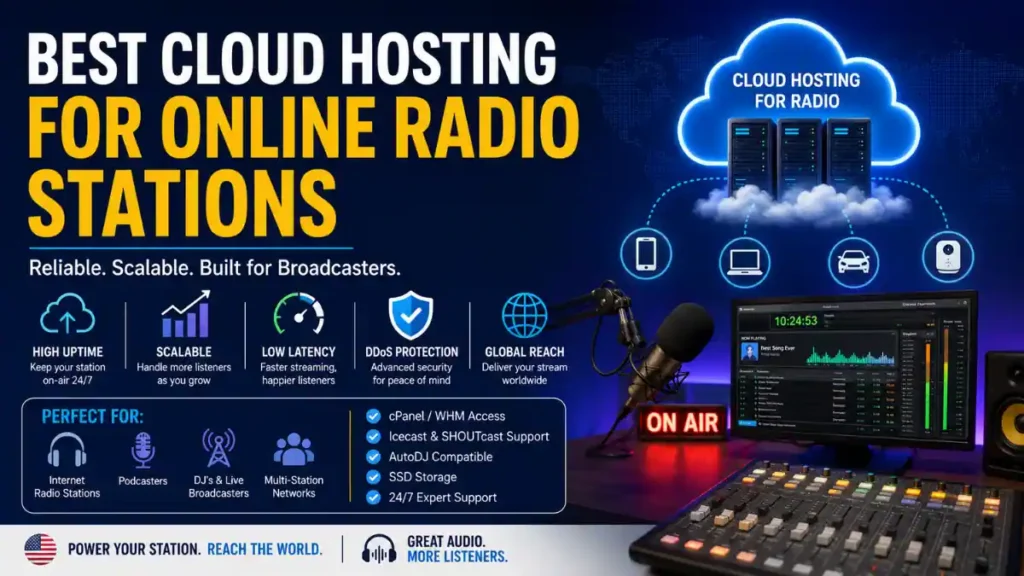
Cloud hosting for radio stations uses virtualized servers distributed across multiple data centers instead of relying on one physical machine.
In simple terms, your radio stream isn’t tied to a single server sitting in one location.
That matters because internet radio traffic can fluctuate dramatically. One mention on social media, a live sports event, or a guest DJ session can suddenly push listener counts much higher than normal.
With cloud hosting, resources can scale more efficiently when traffic increases.
Why Radio Stations Use Cloud Hosting
Online radio broadcasters commonly move to cloud hosting for several reasons:
- Better uptime reliability
- Easier listener scaling
- Lower risk of stream interruptions
- Global listener delivery
- Faster mobile streaming performance
- Remote access for DJs and producers
- Improved disaster recovery
For stations with listeners across multiple states or countries, cloud infrastructure can also reduce buffering by serving streams closer to the listener’s region.
How Cloud Hosting Works for Internet Radio
Most online radio stations use a setup that includes:
| Component | Purpose |
|---|---|
| Streaming server | Delivers live audio to listeners |
| Automation software | Schedules music, ads, and shows |
| Encoder software | Sends audio to the server |
| Cloud hosting platform | Provides scalable infrastructure |
| CDN or relay servers | Helps distribute streams globally |
A broadcaster may use software like:
- Mixxx
- SAM Broadcaster
- RadioBOSS
- BUTT (Broadcast Using This Tool)
- OBS Studio for video/radio simulcasts
- AzuraCast
- Icecast
- SHOUTcast
The cloud host provides the server resources that power these tools.
Key Features to Look for in Cloud Hosting Radio Services
Not all cloud hosting platforms work well for audio streaming.
Some general-purpose hosts perform poorly under continuous streaming loads, especially if bandwidth policies are restrictive.
High Bandwidth Availability
Radio streaming constantly transfers data.
For example:
- A 128 kbps stream to 500 listeners uses substantial monthly bandwidth
- HD AAC streams consume even more
- 24/7 broadcasting creates nonstop traffic
Look for providers offering:
- High outbound bandwidth
- Unmetered transfer options
- Audio-stream-friendly policies
Low Latency Streaming
Latency affects how quickly listeners hear your stream.
High latency creates noticeable delays during:
- Live call-in shows
- Sports commentary
- Interactive DJ broadcasts
- Synchronized video streams
Cloud hosts with multiple US data centers often provide better performance for nationwide audiences.
Scalability
One of the biggest advantages of cloud hosting is scaling.
A station averaging 40 listeners may suddenly jump to 2,000 listeners during:
- Holiday programming
- Community emergencies
- Viral social media exposure
- Local events
- Music premieres
Good cloud hosting can absorb those spikes without crashing the stream.
Reliable Uptime
Internet radio listeners expect streams to work instantly.
Repeated outages damage listener trust quickly.
Look for:
- 99.9% uptime guarantees
- Automated backups
- Redundant network systems
- DDoS protection
Auto DJ and Automation Support
Many broadcasters aren’t live 24/7.
Cloud-compatible automation systems allow stations to:
- Schedule playlists
- Rotate ads
- Insert station IDs
- Manage overnight programming
- Run syndicated content automatically
This is especially important for small independent stations with limited staff.
Types of Cloud Hosting for Online Radio Stations
Shared Radio Hosting
This is the cheapest option.
Best for:
- Beginner broadcasters
- Small hobby stations
- Community projects
Limitations include:
- Lower performance
- Shared resources
- Listener caps
- Less customization
VPS Cloud Hosting
A Virtual Private Server gives you dedicated resources inside a cloud environment.
Good for:
- Mid-sized radio stations
- Podcast networks
- Stations needing custom software
This is often the sweet spot between cost and performance.
Dedicated Cloud Infrastructure
Larger broadcasters may use fully dedicated cloud systems.
Best for:
- High listener counts
- Multi-station networks
- Commercial broadcasters
- Large podcast operations
These setups can support advanced streaming workflows and regional relay servers.
Real-World Example: When Cheap Hosting Becomes a Problem
A small online classic rock station might start on basic web hosting because it seems affordable.
At first, everything works fine with 15 listeners.
Then the station gets featured in a Facebook music group. Suddenly:
- The stream buffers constantly
- Mobile users disconnect
- Audio quality drops
- The server hits bandwidth limits
This is extremely common.
Many new broadcasters underestimate how resource-intensive continuous audio streaming actually is.
Moving to scalable cloud hosting usually solves these issues because resources can expand with audience demand.
Cloud Hosting and Geo-Restricted Radio Access
Some stations target listeners outside their local region.
For example:
- Americans overseas trying to access hometown FM simulcasts
- Sports broadcasts restricted by licensing agreements
- Regional music stations blocked internationally
This is where VPN usage often enters the picture.
Why Some Radio Streams Are Geo-Blocked
Streaming rights can depend on:
- Music licensing agreements
- Advertising restrictions
- Sports broadcast rights
- Country-specific contracts
A station may legally stream only within the United States.
Cloud infrastructure sometimes helps broadcasters manage regional distribution more effectively, but listeners still may encounter restrictions depending on licensing terms.
Audio Quality Considerations in Cloud Radio Hosting
Cloud hosting alone doesn’t guarantee great sound quality.
Broadcasters still need proper encoding settings.
Common Streaming Bitrates
| Bitrate | Typical Use |
|---|---|
| 64 kbps AAC | Mobile-friendly talk radio |
| 128 kbps MP3 | Standard music streaming |
| 192 kbps MP3 | Higher-quality music stations |
| 320 kbps MP3 | Premium audio streaming |
Higher quality requires more bandwidth and stronger hosting infrastructure.
Common Audio Problems
Poorly configured stations often suffer from:
- Clipping audio
- Distortion
- Uneven volume
- Excessive compression
- Buffer underruns
A reliable cloud server helps, but audio processing still matters.
Best Practices for Running an Online Radio Station on Cloud Hosting
Use Separate Encoding and Streaming Systems
Many experienced broadcasters avoid streaming directly from their studio PC.
Instead:
- Audio gets encoded locally
- Sent to a cloud server
- Distributed to listeners globally
This prevents local internet outages from instantly killing the stream.
Monitor Bandwidth Usage
Unexpected listener growth can increase costs rapidly on some cloud platforms.
Track:
- Peak concurrent listeners
- Monthly transfer usage
- Geographic traffic patterns
- Mobile versus desktop listeners
Keep Backup Streams Ready
Professional stations often maintain backup infrastructure.
That may include:
- Secondary Icecast servers
- Backup encoders
- Failover automation
- Cloud snapshot recovery
Common Mistakes Radio Station Owners Make
Choosing Regular Web Hosting Instead of Streaming Hosting
Many cheap web hosts prohibit continuous audio streaming entirely.
Always verify streaming policies before signing up.
Ignoring Mobile Listeners
A huge portion of internet radio listening now happens on:
- Smartphones
- Car dashboards
- Smart speakers
- Bluetooth devices
Streams must load quickly on mobile connections.
Using Bitrates That Are Too High
Some stations stream at unnecessarily high bitrates.
That increases:
- Bandwidth costs
- Listener buffering
- Mobile data usage
For many stations, 128 kbps AAC or MP3 is perfectly acceptable.
Forgetting About Licensing
Cloud hosting does not replace music licensing requirements.
US broadcasters may still need licensing coverage involving organizations like:
- ASCAP
- BMI
- SESAC
- SoundExchange
This is one of the biggest beginner mistakes in internet radio.
Practical Tips for Choosing the Right Cloud Hosting Provider
Prioritize Streaming Experience
A hosting company experienced with radio streaming usually understands:
- Icecast optimization
- SHOUTcast deployment
- AutoDJ systems
- Relay server configuration
- Audio traffic handling
Generic hosting companies sometimes don’t.
Test Before Committing
Always test:
- Stream stability
- Listener buffering
- Dashboard usability
- Support response times
- Mobile playback quality
Free trials can help reveal problems early.
Think About Future Growth
Even small stations can grow unexpectedly.
Choose hosting that allows:
- Additional relay servers
- More listener slots
- Extra storage
- Multiple stations
- Podcast hosting integration
Important Technical Requirements for Cloud Radio Hosting
Before launching an online station, make sure you have:
Minimum Technical Essentials
- Stable upload internet connection
- Reliable encoder software
- Cloud streaming server
- Audio processing tools
- Licensing coverage
- Backup audio source
Recommended Technical Features
- AAC streaming support
- SSL streaming
- Auto failover
- Analytics dashboard
- Mobile-compatible streams
- CDN integration
- Remote management access
Internet Speed Considerations
Broadcasters often focus only on download speed.
Upload speed matters far more for live streaming.
For example:
- A stable live radio stream may require strong, consistent upload bandwidth
- Wi-Fi instability can interrupt broadcasts
- Ethernet connections are generally safer for live studios
FAQ
What is the best cloud hosting type for a small online radio station?
For most small stations, VPS cloud hosting offers the best balance between affordability, flexibility, and performance.
Can I run an online radio station from home?
Yes, many broadcasters do. However, using cloud hosting for the streaming server is usually more reliable than streaming directly from a home computer alone.
Does cloud hosting improve audio quality?
Indirectly, yes. Better infrastructure reduces buffering and interruptions, but actual sound quality still depends on encoding settings, microphones, audio processing, and bitrate choices.
Is cloud hosting expensive for internet radio?
Costs vary widely. Small hobby stations may spend relatively little, while large commercial stations with thousands of listeners can require significant bandwidth budgets.
Do online radio stations need licensing in the USA?
In many cases, yes. Stations streaming copyrighted music often need proper licensing agreements and royalty reporting.
What bitrate should an internet radio station use?
128 kbps is still a common balance between sound quality and bandwidth efficiency. Talk radio stations may use lower bitrates, especially for mobile audiences.
Final Thoughts
Cloud hosting has changed how online radio stations operate.
Years ago, internet broadcasters often struggled with overloaded servers, poor reliability, and limited scalability. Today, cloud infrastructure gives even small independent stations access to technology that used to be available only to larger broadcasters.
But hosting alone doesn’t guarantee success.
Good internet radio still depends on:
- Stable audio delivery
- Smart bitrate choices
- Reliable automation
- Listener-friendly mobile access
- Consistent uptime
- Proper licensing compliance
For broadcasters serious about building a dependable online station, investing in the right cloud hosting radio setup is one of the most important technical decisions they’ll make.
Also Read: How to Start an Internet Radio Station in 2026
Note: We do not host any streaming content on our servers. All radio streams are links provided by official broadcasters for public use.