
How to Listen to American Radio Stations in Europe: The long-running discussion around geo-restricted American radio broadcasts has taken a new turn as listeners across Europe increasingly search for reliable ways to access U.S.-based FM, AM, and digital radio stations online. From sports commentary and classic rock programming to local American talk shows and public radio, demand for U.S. radio content has quietly grown among international audiences.
What was once limited to shortwave enthusiasts and niche internet users has now become part of a broader digital media trend. Streaming platforms, VPN services, smart speakers, and mobile apps have collectively transformed how audiences in Europe consume American radio content.
🎵 Similar Stations
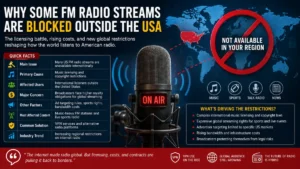
At the same time, broadcasters in the United States are facing licensing restrictions, advertising limitations, and regional distribution agreements that often prevent their content from being freely available outside the country. That combination has created a growing market for technical workarounds and cross-border streaming solutions.
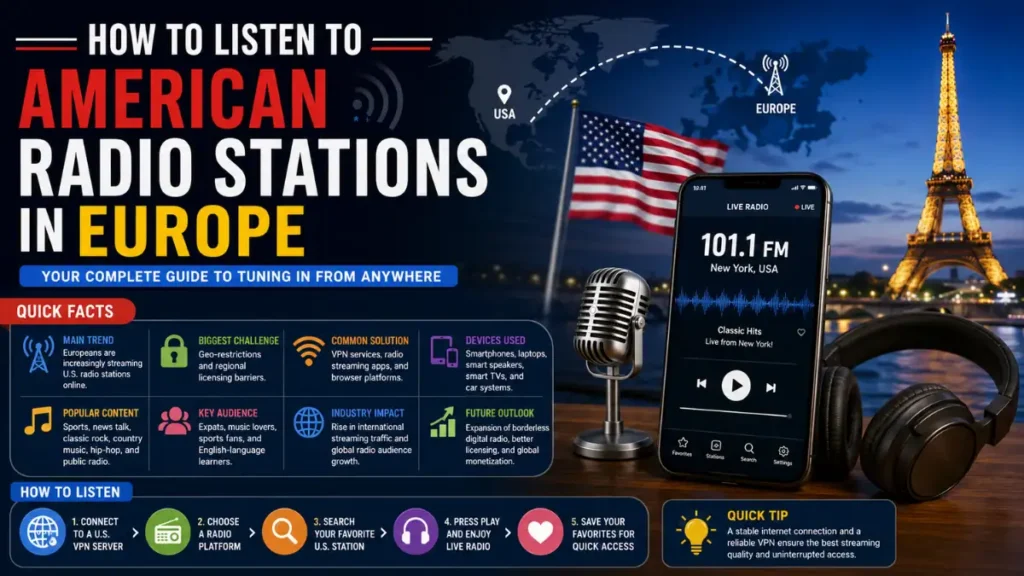
Quick Facts: How to Listen to American Radio Stations in Europe
| Topic | Details |
|---|---|
| Main Trend | European listeners are increasingly streaming U.S. radio stations online |
| Popular Content | Sports radio, classic rock, country music, news talk, NPR-style programming |
| Biggest Challenge | Geo-restrictions and regional licensing barriers |
| Common Solution | VPN services, radio streaming apps, browser-based platforms |
| Devices Used | Smartphones, laptops, smart TVs, Alexa devices, car infotainment systems |
| Key Audience | Expats, music enthusiasts, sports fans, English-language learners |
| Industry Impact | Growth in international radio streaming traffic |
| Future Outlook | Expansion of borderless digital radio ecosystems |
Why American Radio Still Has Global Appeal
Despite the explosive growth of podcasts and on-demand music platforms, traditional radio remains surprisingly influential. American radio stations continue to attract international listeners because they offer something many algorithm-driven platforms cannot fully replicate — live personality-driven broadcasting.
European listeners often turn to U.S. stations for:
- Real-time sports analysis
- Local American culture and discussions
- Country music programming
- Classic rock stations
- Hip-hop and urban radio
- Conservative and liberal political talk shows
- Emergency coverage during major events
- Live DJ-hosted broadcasts
Industry analysts say American radio carries a distinctive production style that differs significantly from European public broadcasting formats. U.S. stations are often faster-paced, commercially aggressive, and personality-centric.
For many listeners, especially younger audiences, the appeal lies in authenticity and spontaneity.
The Role of Internet Streaming
The biggest transformation came when traditional radio broadcasters moved online.
Over the last decade, thousands of American stations began offering:
- Web-based live streams
- Mobile applications
- Smart speaker integrations
- Car dashboard streaming support
- Podcast-style replay segments
This digital shift eliminated the need for physical radio frequency access. A listener sitting in Berlin, Paris, Madrid, or Amsterdam could suddenly stream a local station from Texas, New York, or California within seconds.
Still, accessibility has not been entirely seamless.
Why Some American Stations Are Blocked in Europe
A major source of frustration for international listeners is geo-blocking.
Many American stations restrict overseas access because of:
Music Licensing Agreements
Streaming rights for songs often differ from terrestrial broadcast rights. A station may legally air a song on FM radio inside the United States but lack permission to stream the same content internationally.
Sports Broadcasting Restrictions
Professional sports leagues tightly control streaming rights. Local American sports stations carrying NFL, NBA, MLB, or NCAA content frequently block international audiences during live games.
Advertising Contracts
Regional advertising agreements are another factor. Some broadcasters prefer limiting audiences to local markets where their advertisers operate.
Data and Infrastructure Costs
Streaming globally increases bandwidth costs. Smaller local stations may intentionally restrict access to reduce operational expenses.
VPN Services Have Become a Major Gateway
As restrictions increased, VPN adoption surged among international radio listeners.
A VPN, or Virtual Private Network, allows users to route internet traffic through servers located in another country. In practice, this means a listener in Europe can appear digitally located inside the United States.
That workaround often restores access to blocked American radio streams.
Technology researchers note that radio streaming has become one of the lesser-discussed drivers behind consumer VPN subscriptions. While streaming video dominates headlines, audio consumption is quietly contributing to VPN demand.
Users typically choose U.S. server locations such as:
- New York
- Los Angeles
- Chicago
- Miami
- Dallas
This helps unlock region-locked radio websites and mobile applications.
Smart Speakers Are Changing Listening Habits
The rise of smart speakers has also accelerated global radio consumption.
Devices such as:
- Amazon Alexa-enabled speakers
- Google Nest devices
- Apple HomePods
now allow users to stream international stations using simple voice commands.
European listeners increasingly use commands such as:
- “Play New York sports radio”
- “Play American country music station”
- “Play Los Angeles talk radio”
This behavior reflects a larger shift in media consumption where audiences no longer think in terms of national broadcasting borders.
Radio Aggregator Apps Are Expanding Fast
Another major factor behind the trend is the rise of radio aggregation platforms.
These apps compile thousands of stations into centralized directories, making global discovery easier than ever.
Popular features include:
- Genre filtering
- Country-based search
- Favorites syncing
- Car mode integration
- Sleep timers
- HD audio streaming
Some platforms now report strong user growth from European markets specifically searching for American stations.
Industry observers say this is part of a wider “digital nostalgia” movement where audiences seek curated live experiences instead of endless algorithmic playlists.
American Sports Radio Has a Dedicated European Audience
One of the most rapidly growing categories is U.S. sports radio.
European listeners are increasingly following:
- NFL analysis shows
- NBA post-game coverage
- Baseball commentary
- Fantasy sports programs
- UFC and combat sports radio
This trend aligns with the growing popularity of American sports leagues internationally.
Many fans prefer local U.S. sports radio because it provides emotional reactions, insider commentary, and regional fan perspectives unavailable in international television coverage.
Sports broadcasters have noticed the trend, though rights restrictions remain a constant challenge.
Expats and Travelers Are Driving Consistent Demand
American expatriates living in Europe remain a core audience segment.
For many expats, local radio provides:
- Cultural familiarity
- Regional news updates
- Weather alerts from hometowns
- Political commentary
- Familiar music rotations
Travelers also contribute to temporary spikes in streaming activity, especially during holiday periods and major sports seasons.
The Technical Challenges Behind Streaming U.S. Radio Abroad
While access has improved, users still encounter several technical barriers.
Common Problems Include:
- Streams refusing overseas connections
- Frequent buffering
- Mobile app region restrictions
- Browser compatibility issues
- Smart speaker location mismatches
- Licensing-based blackout messages
Internet infrastructure also plays a role. Audio streaming requires stable connections, especially for HD-quality feeds.
Some broadcasters additionally detect VPN traffic and block certain server ranges.
This creates an ongoing technological tug-of-war between access systems and restriction systems.
Broadcasters Are Slowly Adapting
Some American radio companies have started recognizing international audiences as a valuable opportunity instead of a problem.
A growing number of stations now offer:
- Dedicated international streams
- Ad-supported global feeds
- Subscription-based premium listening
- Podcast alternatives
- YouTube simulcasts
Public radio organizations have particularly benefited from international listener donations.
Commercial broadcasters, however, still face more complicated licensing realities.
The Bigger Media Industry Shift
The growing interest in American radio abroad reflects a much larger transformation happening across the media industry.
Traditional geographical boundaries are weakening.
Music, radio, podcasts, live broadcasts, and streaming platforms are increasingly consumed in borderless digital ecosystems.
Media analysts argue that audiences no longer identify content by transmission origin. Instead, they follow personalities, communities, genres, and interests.
This fundamentally changes how broadcasters think about audience reach.
For radio companies, international streaming is no longer just a side feature. It is becoming part of long-term digital survival strategies.
Privacy and Legal Considerations
Experts also warn users to understand local regulations and platform terms before using VPN-based access methods.
While VPN usage is legal in most European countries, content licensing rules still vary. Some broadcasters explicitly prohibit bypassing regional restrictions in their terms of service.
Cybersecurity professionals additionally advise listeners to avoid unknown streaming mirrors or unofficial radio apps that may contain malware or excessive advertising trackers.
Choosing reputable platforms remains essential.
What Happens Next
Industry insiders expect international radio streaming to continue expanding over the next several years.
Several developments are likely to shape the future:
- AI-driven radio personalization
- Hybrid live radio and podcast systems
- Smarter voice assistant integration
- Globalized advertising models
- Better licensing agreements for international streaming
- Expansion of digital-only American radio stations
The line between local and global broadcasting is rapidly fading.
For European listeners, American radio is no longer a distant signal bouncing across frequencies late at night. It has become an instantly accessible digital experience available from virtually any connected device.
Radio Think’s View
The rise of American radio streaming in Europe is not just about entertainment. It reflects a deeper change in how audiences consume media globally.
Streaming technology has quietly removed many of the barriers that once protected regional broadcasting markets. Listeners today are no longer limited by geography, transmitter range, or national programming schedules.
What stands out is the emotional factor behind this trend. People are actively searching for human-led broadcasting experiences again. After years dominated by automated playlists and algorithm-based recommendations, live radio personalities are regaining relevance.
There is also a strong business angle here.
Broadcasters that adapt early to international digital audiences could unlock new revenue streams through premium memberships, targeted advertising, and subscription audio services. Stations that ignore the shift may struggle as younger audiences move toward borderless audio ecosystems.
The next phase will likely revolve around licensing reform. If broadcasters and music rights organizations simplify international streaming permissions, global radio consumption could grow significantly faster.
American radio’s appeal in Europe is no longer a niche phenomenon. It is becoming part of a larger transformation where audio content moves freely across borders, devices, and platforms — reshaping the future of broadcasting itself.
Also Read: Best Free VPN for Internet Radio Streaming
Note: We do not host any streaming content on our servers. All radio streams are links provided by official broadcasters for public use.