
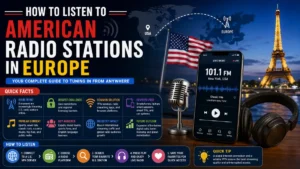
How to Unblock USA Radio Stations from Anywhere: The long-running frustration among international radio listeners is now becoming a larger digital conversation. Thousands of users outside the United States continue to face restrictions while trying to stream American FM and AM radio stations online. From regional country music broadcasters in Texas to popular sports talk radio networks in New York, many stations either block foreign listeners entirely or limit access due to licensing agreements.
As internet radio consumption rises globally, the issue has moved beyond casual entertainment. For many listeners, American radio is tied to cultural identity, live sports coverage, local news, political commentary, and even nostalgia. The demand for uninterrupted access has created a parallel surge in searches related to VPN services, geo-unblocking tools, and online radio streaming platforms.
🎵 Similar Stations
What was once a niche technical workaround is now becoming a mainstream digital habit.
How to Unblock USA Radio Stations from Anywhere
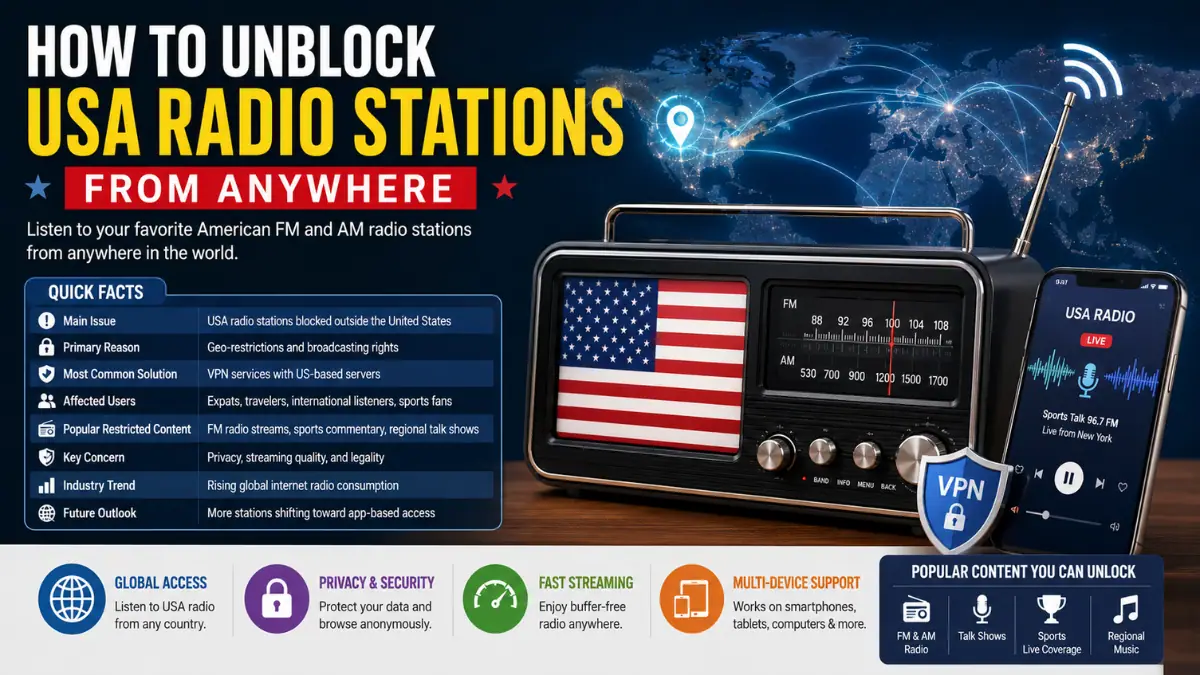
Quick Facts
| Topic | Details |
|---|---|
| Main Issue | USA radio stations blocked outside the United States |
| Primary Reason | Geo-restrictions and broadcasting rights |
| Most Common Solution | VPN services with US-based servers |
| Affected Users | Expats, travelers, international listeners, sports fans |
| Popular Restricted Content | FM radio streams, sports commentary, regional talk shows |
| Key Concern | Privacy, streaming quality, and legality |
| Industry Trend | Rising global internet radio consumption |
| Future Outlook | More stations shifting toward app-based access |
Why Many USA Radio Stations Are Blocked Internationally
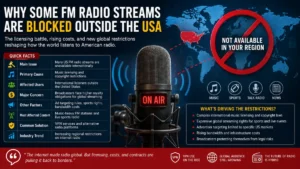
A large section of American radio broadcasters use geographic filtering systems that identify the listener’s IP address. If the connection appears to come from outside the United States, the stream may become unavailable.
This restriction generally comes from:
- Music licensing agreements
- Sports broadcasting rights
- Regional advertising contracts
- Digital distribution limitations
- Content ownership rules
Several stations purchase rights only for domestic streaming. Extending those rights globally can significantly increase operational costs. Because of this, broadcasters often prefer limiting access to American audiences only.
Sports radio is among the most restricted categories. Major league coverage often includes separate international broadcasting agreements, which prevent unrestricted online streaming abroad.
Listeners usually encounter messages such as:
- “This content is unavailable in your region.”
- “Streaming restricted outside the USA.”
- “Due to licensing limitations, this station cannot be accessed internationally.”
For international audiences, these restrictions can feel increasingly outdated in a globally connected internet ecosystem.
Also Read: Best VPNs for Listening to USA FM Radio Outside America
The Technology Behind Geo-Restrictions
Every internet-connected device operates using an IP address. Streaming platforms analyze this address to determine the listener’s approximate location.
When someone from India, Europe, the Middle East, or Asia attempts to open a USA-only stream, the broadcasting server immediately recognizes the non-US location and blocks access.
This system is known as geo-blocking.
Streaming companies rely on:
- IP databases
- DNS detection systems
- Regional authentication protocols
- Streaming server filters
As streaming technology becomes more sophisticated, some broadcasters have also started identifying VPN traffic patterns. This has created a technological tug-of-war between streaming platforms and privacy services.
Why VPN Services Have Become the Most Popular Solution
Virtual Private Networks, commonly known as VPNs, have become the primary tool for bypassing regional restrictions.
A VPN reroutes internet traffic through servers located in another country. When a listener connects to a US-based VPN server, the streaming platform identifies the connection as American.
That simple shift often restores access instantly.
The rise in VPN adoption is closely tied to:
- Internet privacy concerns
- Streaming platform restrictions
- Cross-border content demand
- Remote work culture
- Digital security awareness
Industry analysts have noted that entertainment access is now one of the biggest drivers behind consumer VPN subscriptions.
For radio listeners specifically, VPN usage has surged because radio streaming consumes relatively low bandwidth compared to video platforms. That makes uninterrupted listening easier even on moderate internet connections.
The Growing Popularity of American Radio Outside the USA
American radio still holds massive influence globally despite the dominance of podcasts and video streaming.
Several factors explain this continued popularity.
Live Sports Coverage
US sports radio remains a major attraction for international fans of:
- NFL
- NBA
- MLB
- NHL
- College football
Local commentary and regional sports analysis often provide insights unavailable through international broadcasts.
Regional Music Culture
Country music stations from Nashville, classic rock stations from California, and hip-hop radio from New York attract global listeners searching for authentic regional sound.
Political Talk Radio
American political radio has become increasingly influential internationally, particularly during election cycles and major policy debates.
Nostalgia Among Expats
Millions of Americans living abroad rely on hometown radio stations to maintain emotional and cultural connections.
For many users, hearing familiar radio hosts, weather updates, and local discussions provides a sense of continuity while living overseas.
Mobile Apps Are Changing the Streaming Landscape
Traditional browser-based radio streaming is gradually being replaced by mobile apps.
Many broadcasters now prioritize:
- Official radio apps
- Smart speaker integration
- Mobile-exclusive content
- Subscription-based listening
This shift creates both opportunities and complications.
Some apps bypass browser restrictions more effectively, while others include even stricter location verification systems.
Radio streaming companies increasingly want direct control over user data, advertising metrics, and listening behavior. Dedicated apps provide broadcasters with deeper analytics compared to traditional website streams.
The trend suggests that future access may depend less on websites and more on platform ecosystems.
Free VPNs vs Paid VPNs: A Critical Difference
A major concern among listeners is whether free VPN services are sufficient.
Cybersecurity experts consistently warn users about the limitations of free VPN platforms.
Common Issues With Free VPNs
- Slow streaming speeds
- Limited server availability
- Data collection practices
- Frequent disconnections
- Poor audio quality
- Restricted bandwidth
Some free services also monetize user activity through advertising partnerships or data tracking systems.
Paid VPN providers generally offer:
- Faster US servers
- Stable streaming performance
- Stronger encryption
- Better privacy protection
- More device compatibility
For users listening to live sports or uninterrupted talk radio, streaming consistency becomes especially important.
Legal Questions Around Unblocking Radio Streams
The legality of VPN usage varies by country, but in most regions, using a VPN itself is not illegal.
The more complex issue relates to platform terms of service.
Some broadcasters prohibit access manipulation through contractual user agreements. However, enforcement against individual radio listeners remains relatively uncommon.
Experts recommend users carefully review:
- Local internet laws
- Streaming platform policies
- VPN provider transparency
- Privacy standards
The legal landscape remains fluid as governments and streaming companies continue adjusting digital distribution rules.
Internet Radio Is Entering a New Competitive Era
The online audio market has become significantly more crowded.
Traditional radio now competes with:
- Podcasts
- Spotify playlists
- YouTube streaming
- AI-generated audio channels
- Smart speaker ecosystems
Despite this competition, live radio still offers one major advantage: immediacy.
Breaking news, real-time sports reactions, weather alerts, and live DJ interaction continue to attract loyal audiences.
Industry observers believe radio stations that embrace global accessibility may gain long-term digital advantages.
Restricting international audiences could limit future growth opportunities, especially as diaspora communities and global listeners continue expanding.
Privacy Concerns Are Also Driving User Behavior
Interestingly, many users initially searching for unrestricted radio access eventually become more privacy-conscious internet users.
VPN adoption often introduces consumers to broader cybersecurity concepts such as:
- Encrypted browsing
- Public Wi-Fi protection
- Digital identity masking
- Online tracking prevention
This shift has transformed VPN companies from niche security tools into mainstream digital services.
The radio streaming issue has unintentionally become part of a much larger conversation about internet freedom and borderless content access.
What the Future Could Look Like
Media analysts believe several changes are likely over the next few years.
More Global Licensing Deals
Broadcasters may begin purchasing broader international streaming rights as overseas demand grows.
Subscription-Based Radio Platforms
Premium radio memberships could replace free unrestricted streaming models.
AI-Powered Content Recommendations
Radio apps are expected to integrate personalized recommendation engines similar to music streaming services.
Greater Smart Device Integration
Internet radio will likely become more embedded into:
- Smart TVs
- Car infotainment systems
- Voice assistants
- Wearable devices
Stronger Anti-VPN Detection
Streaming companies may continue investing in advanced location verification systems.
The battle between content accessibility and licensing control is far from over.
Radio Think’s View
The conversation around unblocking USA radio stations is no longer just about entertainment access. It reflects a broader transformation in how digital audiences consume media across borders.
The biggest trend visible right now is fragmentation. Users no longer depend solely on one platform for music, news, or sports. They move fluidly between radio, podcasts, streaming apps, and social platforms. In that environment, restricting access based on geography increasingly feels like an outdated broadcasting model.
There is also a strong business angle behind this issue. American radio stations hold valuable niche audiences worldwide, especially among expatriates and regional music fans. Stations that recognize this global demand early could build stronger digital communities and advertising ecosystems.
At the same time, privacy concerns cannot be ignored. Many users adopt VPNs for simple streaming access but eventually become aware of deeper cybersecurity realities. That creates a secondary digital behavior shift that extends beyond radio.
The next phase of online radio will likely depend on balance. Broadcasters want licensing protection and revenue control. Users want accessibility and freedom. The platforms that successfully manage both sides may define the future of internet radio in the coming decade.
Note: We do not host any streaming content on our servers. All radio streams are links provided by official broadcasters for public use.